The Air Fryer That’s Actually a Small, Angry Oven
If you’re looking at this particular air fryer, you’re likely in a specific, slightly frustrated camp. You’ve seen the hype, maybe tried a friend’s single-basket model, and thought, “This is fine for fries, but I can’t actually cook a meal in it.” You’re right. Most people get air fryers wrong from the start—they’re not just deep fryer replacements. They’re small, incredibly efficient convection ovens. This model, the DAYBEST with the stainless steel and ceramic basket, understands that assignment better than most, but with a few quirks that define its place in your kitchen.
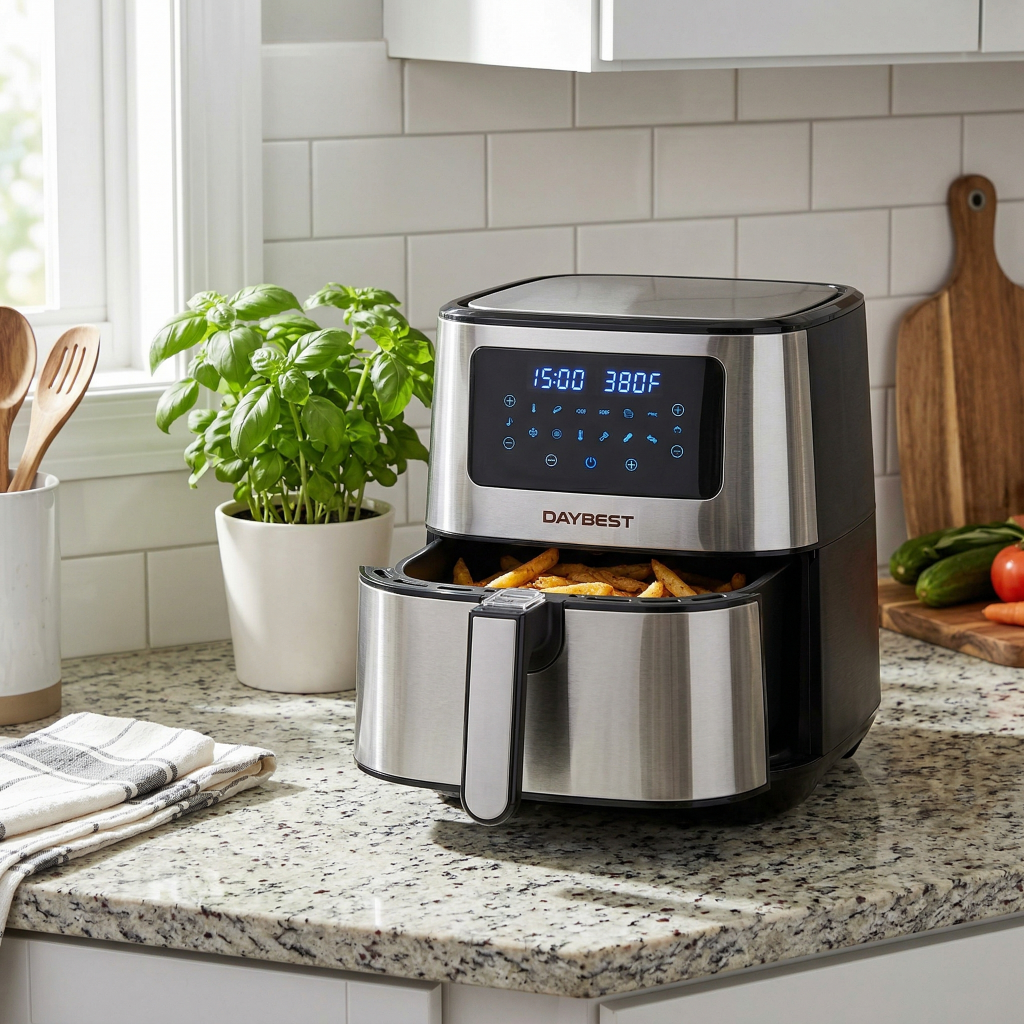
Where it immediately stands out is in its feel. The stainless steel exterior doesn’t feel like a plastic toy; it has a bit of heft and cleans up without holding onto greasy fingerprints. The ceramic-coated basket is the real story. Unlike the standard non-stick baskets that scratch if you look at them wrong, this one stands up to metal utensils. I’ve used a fork to pry out a stubborn piece of chicken without a second thought. That’s a game-changer for daily use and long-term durability. It also, as advertised, goes straight into the dishwasher without a worry. After years of hand-washing air fryer baskets, this feels like a legitimate luxury.
But this focus on sturdy materials creates its primary tradeoff: space. The basket walls are thick, and the heating element sits close to the food. The listed capacity (typically 5-6 quarts for this style) feels optimistic for bulky items. A full pound of broccoli florets works. A whole chicken? No. A frozen pizza that’s 9 inches in diameter? It’ll fit, but the crust will be perilously close to the top heating element. You learn to cook in a single, dense layer. This isn’t the air fryer for casually piling in a heap of frozen snacks; it’s for methodically arranging your food with a bit of breathing room.
That proximity to the heating element, however, is also its superpower. It gets fiercely, aggressively hot very fast. Reheating is where it shines unexpectedly. Leftover pizza comes back with a crackling crust and melted cheese in 3 minutes, far superior to a microwave or even a standard oven. Fried chicken regains its crunch. It excels at any task where you want to drive off moisture and re-crisp. The “air fry” function is just one of its presets; you’ll likely use the “bake” and “reheat” buttons just as often. It’s a better mini-oven than it is a fryer.
There are two things you’d regret not knowing. First, the beep. It’s a loud, sharp, single-tone alarm to signal the end of a cycle or when you need to shake the basket. There’s no volume control, and in a small apartment, it’s jarring. You learn to anticipate it. Second, the preheat cycle is automatic and non-negotiable for most functions. You can’t just set a time and temp and start; it runs a 3-minute preheat every time. This is actually good for consistent results, but it requires a mental shift if you’re used to older models where you just turn a dial.
So, who ends up keeping this? Someone who cooks for one or two people, values easy cleanup and build quality over massive capacity, and understands they’re buying a compact, turbocharged oven, not a magic fat-free fryer. It won’t cook a family’s worth of wings in one go, but it will make the best single-serving of roasted vegetables, the crispiest reheated takeout, and a perfectly cooked salmon filet in under 10 minutes. It’s for the person who sees a kitchen tool as a long-term investment, not a novelty, and is willing to work within its spatial limits for the payoff of consistent, no-fuss results. Just keep an ear out for the beep.