The Double-Stack Air Fryer: A Kitchen Space-Saver That Demands a New Routine
If you’ve clicked on this, you’re likely looking at that tall, dual-basket air fryer with the intriguing “SyncFinish” feature. You’re not just shopping for an air fryer; you’re shopping for a solution to a specific kitchen problem: you want the capacity to cook a full meal (protein and sides) without sacrificing half your counter space to a bulky appliance. This is that appliance. But living with it is a bit different than living with a standard, single-basket model.
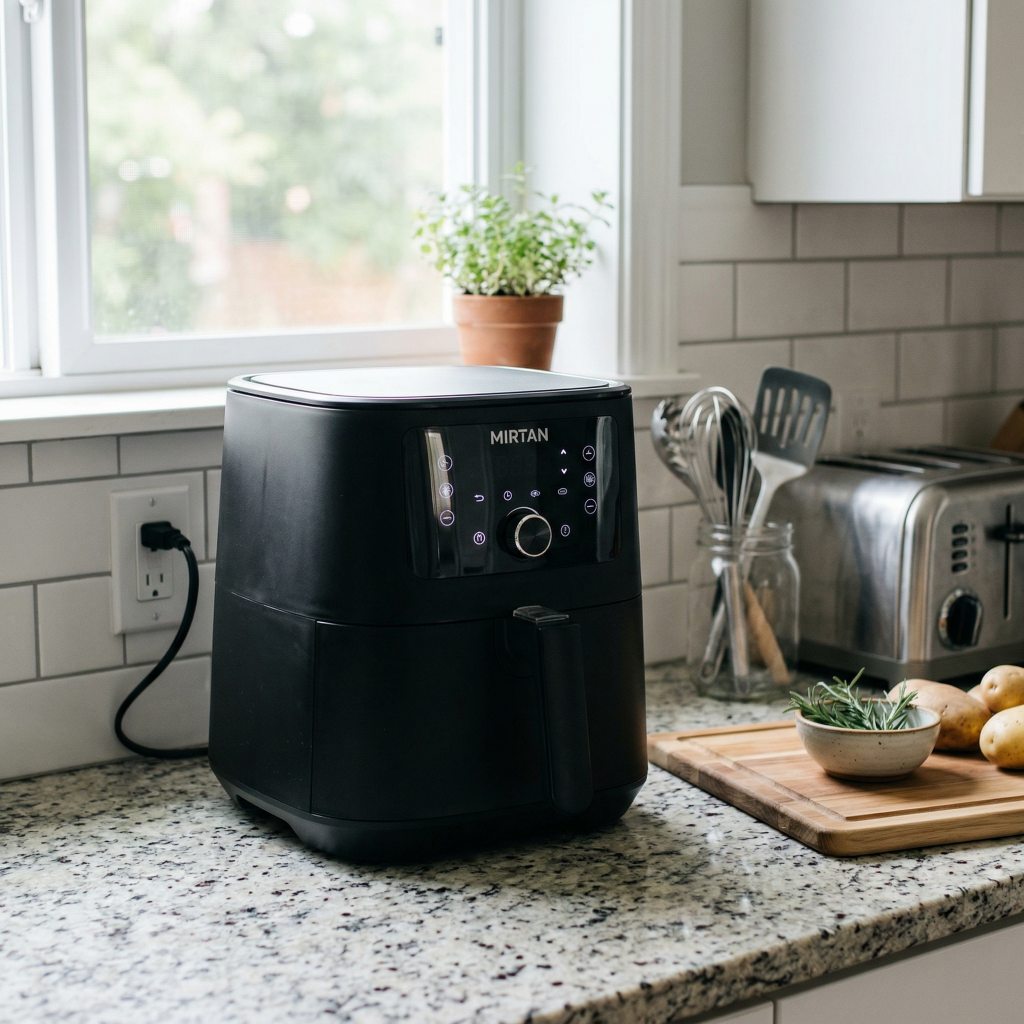
The immediate appeal is obvious. Instead of two separate units side-by-side, you have two stacked baskets that share a single footprint. For apartment dwellers or anyone with limited counter real estate, this is a legitimate game-changer. You get the functional equivalent of a large, multi-function air fryer without the sprawling width. The build feels solid, the digital controls are straightforward, and the “Dishwasher Safe” claim for the baskets and pans is a non-negotiable must-have that this model gets right.
But here’s the thing most people get wrong about this style: you don’t buy it for simultaneous, independent cooking. You buy it for sequential, managed cooking. The “SyncFinish” function is clever—it lets you set different times and temperatures for each basket, and the unit will calculate a delayed start for the second basket so both finish together. In theory, it’s brilliant for a chicken breast and sweet potato fries. In practice, it requires you to know the exact cook times for everything upfront. If you’re the type to shake the basket and check for doneness, this automated feature can feel restrictive. You become a meal planner, not a spontaneous cook, to use it effectively.
Where this unit excels is in its pure, high-heat convection performance. The heating element and fan are powerful, and because each basket is a standard, square shape (not a small, round bowl), you get excellent, even browning on things like frozen fries, roasted vegetables, and chicken wings. The crisping is top-tier. The stacked design, however, creates its own unique quirk: the top basket drips into the bottom basket. This is critical. If you’re cooking something exceptionally greasy like bacon or sausages in the top, you must have something in the bottom basket to catch the fat, even if it’s just the empty pan. Otherwise, you’ll have a smoky mess and a lengthy cleanup. It’s a simple physical reality of the design that the marketing images don’t show you.
The other specific limitation is access. When both baskets are full and hot, pulling out the lower basket requires a bit of care. It’s not awkward, but you become acutely aware of the hot metal of the top basket directly above your forearm. It’s a small moment that makes you move more deliberately than with a front-loading oven-style air fryer.
What you’d regret not knowing is that while this saves counter space, it demands more vertical clearance. You need a good 16 inches of free space above your counter to open the top basket fully and safely. Check that cabinet clearance above your coffee maker. If you don’t have it, this model becomes a frustrating puzzle.
So, who is this for? It’s for the person or couple who cooks for 2-4 people, values a clean countertop, and is willing to trade a little bit of “set-it-and-forget-it” simplicity for the efficiency of a dual-zone system. It’s not for the large family that needs to cook five pounds of wings at once (the individual baskets are decent but not huge), and it’s not for the cook who refuses to read the manual. But if you understand its rules—plan your meal times, always use the bottom pan, and respect the vertical space—it performs brilliantly. It turns a potential two-appliance problem into one neat, very effective column on your counter.