Ninja AF141 10-Quart Air Fryer vs. TurboBlaze Premium Air Fryer: The Countertop Appliance That Fits Your Life vs. The One That Fits Your Counter
This isn’t a comparison of two similar air fryers. It’s a choice between two fundamentally different philosophies of what a countertop appliance should be. The Ninja AF141 is a multi-function kitchen hub for someone who cooks. The TurboBlaze is a sleek, single-purpose tool for someone who reheats and snacks. Picking the wrong one will leave you either frustrated by complexity or disappointed by limitation.
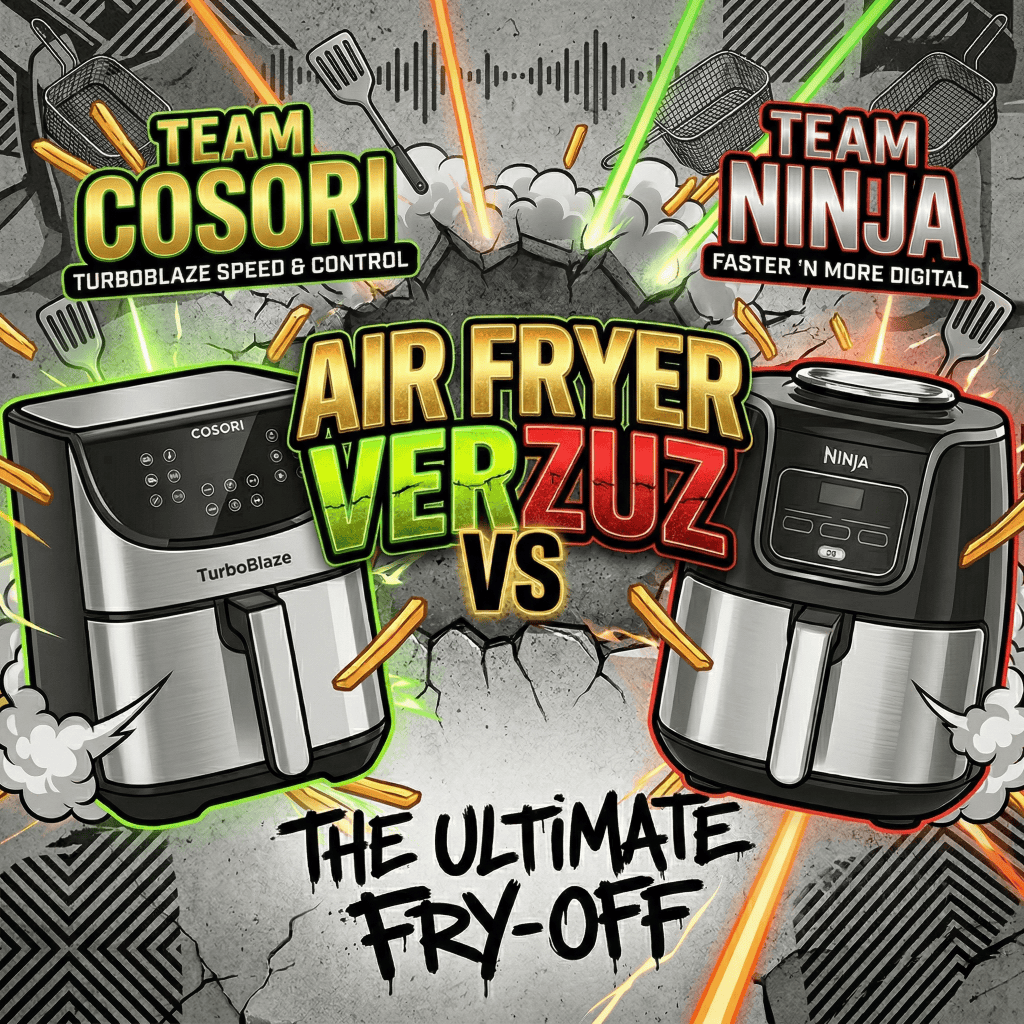
The Ninja AF141: For the Home Cook Who Wants to Replace the Oven
The Ninja AF141 isn’t just an air fryer; it’s a 10-quart, dual-zone countertop oven with ambitions. Its identity is built around its “DualZone Technology,” which lets you run two different foods at two different temperatures and times simultaneously. This isn’t a gimmick for most buyers—it’s the core reason you’d choose this behemoth.
Who buys this: You’re the person who looks at a recipe and thinks, “I could make that on a weeknight.” You value the process of cooking, not just the outcome. You’re likely cooking for a family of 3+ or regularly entertain small groups. Your kitchen reality involves juggling components of a meal—chicken breasts and roasted broccoli, salmon and asparagus, fries and mozzarella sticks for the kids. The idea of cooking in batches or compromising on doneness is unacceptable. You see the $200+ price tag as an investment to declutter your oven and speed up meal prep.
The specific, non-obvious wins: 1. The “Full Meal” function is its killer app. You can put a protein on one side and a vegetable on the other, hit a single button, and it automatically sets both zones to appropriate, complementary settings. This isn’t in the manual of a standard air fryer. It transforms the appliance from a snack maker to a genuine dinner engine. 2. Its size is a feature and a flaw. The 10-quart capacity means you can fit a 9-inch pie plate or a 9×13 casserole dish (with the divider removed). This opens up possibilities for baking, dehydrating, and reheating large portions of leftovers that would be impossible in a basket-style fryer. But it also means it will dominate your counter. This isn’t something you tuck away; it’s a statement piece for your kitchen workflow. 3. The dehydration function is legitimately useful. With its precise low-temperature control and large space, you’re not just making kale chips. You could realistically make jerky, dry herbs from your garden, or fruit leathers. This is a feature borrowed from dedicated dehydrators, not tacked-on.
What you’ll regret not knowing: The Sync & Finish feature, which syncs cooking times so both zones finish together, sounds perfect. In practice, it often means the simpler item (like fries) will sit in residual heat waiting for the thicker item (like chicken) to finish, potentially getting soggier than if you’d just timed them separately. The smart move is to use Sync & Finish for items with similar cook times, not wildly different ones.
The TurboBlaze Premium: For the Solo Dweller or Couple Who Wants Effortless Crisp
The TurboBlaze presents a completely different proposition. Its entire identity is built on its “Premium Ceramic Coating” and a focus on being a better, faster, easier version of the classic basket air fryer. It’s not trying to be an oven. It’s trying to be the best at what a traditional air fryer does: make food crispy with minimal oil and even less effort.
Who buys this: You want chicken wings, frozen fries, reheated pizza, and crispy Brussels sprouts with zero learning curve. You live alone or with one other person. Your kitchen counter space is precious, and you want an appliance that performs one task exceptionally well without demanding a manual. You see an air fryer as a luxury convenience tool, not a primary cooking vessel. The sub-$100 price point feels right for a specialized gadget.
The specific, non-obvious wins: 1. The ceramic coating is about cleanup, not just non-stick. While most brands tout non-stick baskets, TurboBlaze’s ceramic claim directly targets the single most annoying part of air fryer ownership: scrubbing baked-on grease off the mesh basket. For someone who dreads cleanup, this is a legitimate selling point that impacts daily usability more than an extra function you’ll never use. 2. Its temperature range starts at 90°F. This is unusually low for a budget air fryer and hints at a better thermostat. In real use, this means superior performance for proofing dough (you can put your bread bowl inside), keeping food warm without continuing to cook it, or gently melting chocolate. It’s a subtle spec that indicates more precise engineering. 3. It’s designed for visual cooking. The clear, concise digital interface and prominent timer are built for someone who isn’t following presets. You look at your food, guess at a time and temp, and adjust. It’s intuitive in a way the Ninja’s menu-driven system is not. This is an appliance for instinct, not programming.
What you’ll regret not knowing: The square basket design maximizes interior space, but the heating element is on the top. This can lead to uneven cooking if you overcrowd it, as items directly underneath will crisp faster than those at the edges. The trick is to shake the basket more religiously than you think you need to. This isn’t a “set it and forget it” machine if you fill it up.
The Real Tradeoff: Ambition vs. Refinement
The Ninja AF141 wins when your cooking ambition is high and your tolerance for a large, complex machine is equally high. It’s for the person who views cooking as a project.
The TurboBlaze wins when your desire for simple, perfect results for 1-2 people outweighs any need for versatility. It’s for the person who views cooking as a task.
Choosing the Ninja when you live alone and mostly reheat frozen food will leave you annoyed by its bulk and underutilized features. Choosing the TurboBlaze when you need to cook a family dinner will have you running it in frustrating, time-consuming batches. The gap between them isn’t just in quarts and functions—it’s in the daily rhythm of the kitchen they’re meant to serve.