The Typhur Dome: The Air Fryer That Wants to Be Your Main Oven
If you’re looking at the Typhur Dome, you’re probably past the point of wanting a simple basket-style air fryer. You’re likely someone who cooks for a family, entertains occasionally, and is frustrated by the single-function limitations and small capacity of most countertop appliances. You don’t just want to make frozen fries; you want to roast a whole chicken, bake a casserole, and dehydrate fruit, all without turning on your big oven. The Dome isn’t an accessory; it’s a bid to be your primary cooking hub.
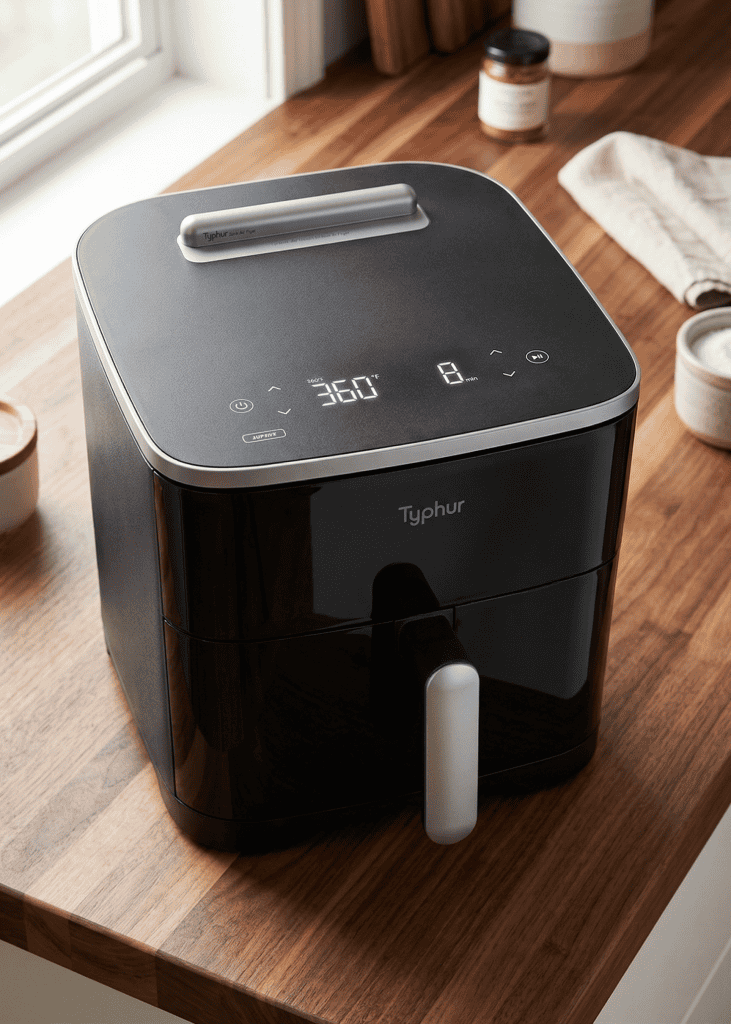
The biggest misconception people have about a product like this is that it’s just a big, fancy air fryer. That undersells its ambition and, more importantly, its physical reality. This isn’t a gadget you tuck away. It’s a substantial, 24-pound stainless steel dome that dominates your counter. The decision to buy it isn’t about features—it’s about whether you’re willing to give it a permanent, privileged spot in your kitchen.
Where the Typhur Dome truly separates itself is in its approach to heat. It uses what Typhur calls a “Turbo Cyclonic” system, which is more than marketing speak. Unlike most air fryers that have a heating element and a fan in the top, the Dome has a rear-mounted system that pulls air in, heats it, and spins it in a vortex. The result is shockingly even cooking. You can load the two wire racks with a dozen chicken thighs, and they’ll all finish at the same time with equally crisp skin. There are no obvious hot spots. This evenness makes it exceptionally good for baking—I’ve had better results with cookies and small cakes in the Dome than in my conventional oven, which has persistent cold zones.
However, this advanced system introduces the Dome’s most significant quirk: the noise. It’s not a gentle hum. When the fan ramps up to full speed, it sounds like a powerful range hood or a small jet engine. It’s a deep, powerful whoosh that makes conversation in the same room difficult. This isn’t a problem for a 15-minute fry cycle, but for a 90-minute low-and-slow roast, it’s a major environmental factor. You will not forget it’s running.
The self-cleaning function is another double-edged sword. It works well, using steam to loosen grease and grime, but the process takes 55 minutes and produces a considerable amount of steam that needs to vent. You can’t just run it and leave the house; you need to be present to manage the steam and wipe down the interior afterward. It’s more “automated cleaning aid” than “set-it-and-forget-it” magic.
What you might regret not knowing is how the touchscreen interface dictates the cooking process. There are no simple manual dials. To adjust time or temperature, you must press the gear icon to enter settings mode, which can feel like an unnecessary extra step when you just want to add five minutes. It’s sleek but occasionally slow. Also, while the capacity is large (6.5 quarts), using both racks for tall items is tricky. A whole spatchcocked chicken fits beautifully on one rack, but put a taller dish like a bakeware pan on the bottom, and the top rack becomes unusable.
The Typhur Dome excels as a replacement for 80% of your traditional oven use, especially in summer when you want to avoid heating the whole kitchen. It preheats in about 5 minutes and is wildly energy-efficient in comparison. But its virtues—power, even heating, capacity—come with the compromises of noise, size, and a need for patience with its smart features. You don’t buy it for convenience; you buy it for superior results, and you make space for it, both physically and acoustically.