The Air Fryer That’s Actually a Mini Convection Oven
If you’re looking at this Evolution stainless steel air fryer, you’re probably tired of the hype and just want to know if it works. You’ve seen the endless recipes for “crispy” everything, but you’re skeptical. You might be someone who already cooks, owns decent pans, and doesn’t want another single-use gadget that’s hard to clean. You’re considering this because it looks more substantial than the plastic pods, and the ceramic coating suggests it won’t be a nightmare to scrub. Let’s talk about what this thing actually is.
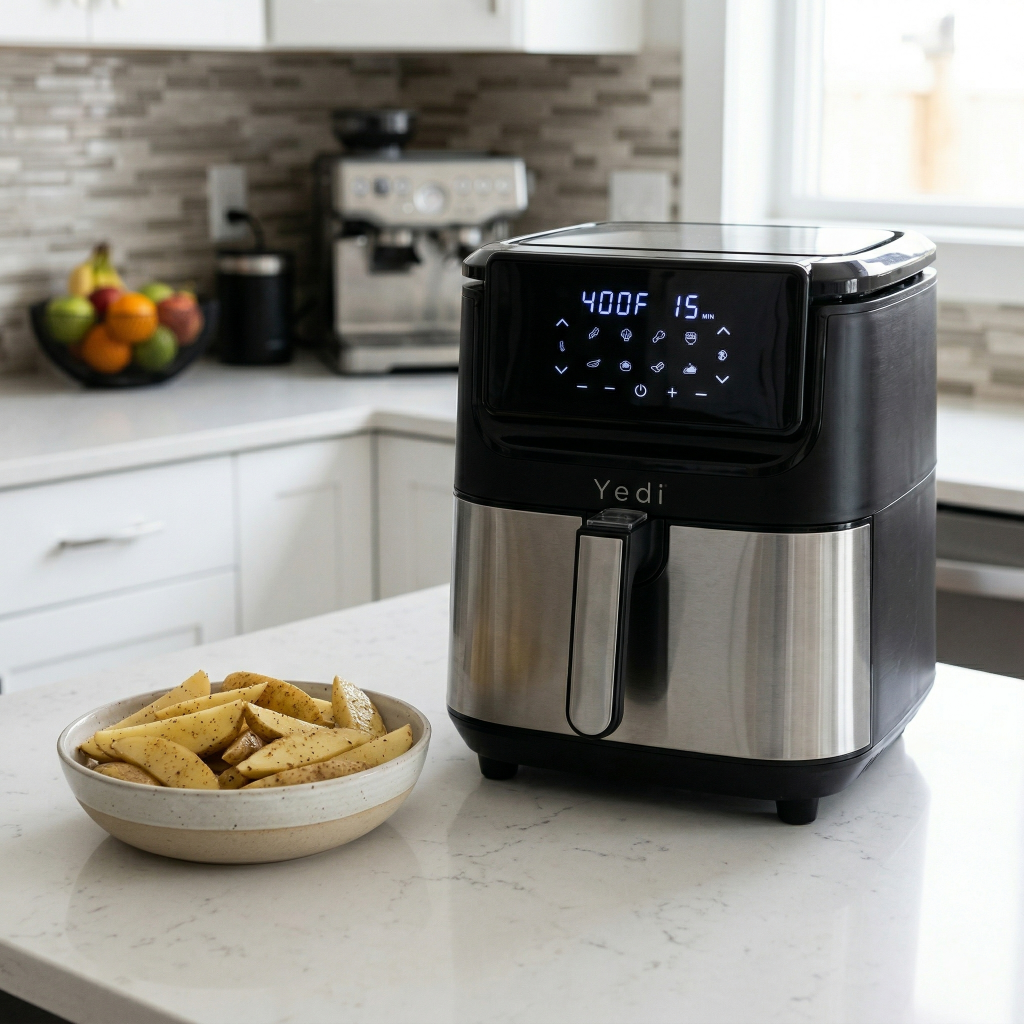
First, the fundamental misunderstanding: people buy “air fryers” thinking they’ll get deep-fryer results. They won’t. This appliance is a powerful, compact convection oven. That’s its strength and its limitation. The Evolution excels at being exactly that—a small, fast, and remarkably even convection oven. Where cheaper models blast air in one direction, creating hot spots that burn one side of your fries while leaving the other soggy, this one’s heating element and fan arrangement (a key design point) creates a more consistent, circulating heat. (see our review) Roasting vegetables is where this shines. Brussels sprouts come out with a deeply caramelized exterior and a tender interior, not just dried out. Reheating pizza or fried chicken returns a shocking degree of crispness without making the food tough.
But it’s not without its quirks. The stainless steel body gets very hot on the top and back during operation—this isn’t a unit you can tuck into a tight space with cabinets close above. It needs room to breathe. The ceramic-coated basket is indeed easier to clean than most bare wire racks, but the coating on the removable divider plate is thinner. Over time, and with aggressive scrubbing, that plate can show wear first. It’s also heavier and more substantial than you might expect from the photos; pulling the hot, full basket out requires a firm grip and a bit of care.
The most specific thing you’ll discover is the preheat paradox. The manual and many recipes insist you must preheat. For frozen, pre-fried foods (fries, nuggets), skipping preheat often yields a better result. Throwing frozen fries into a cold basket lets the exterior dry out a bit as the unit heats, leading to a crispier finish. If you preheat, the immediate intense heat can sometimes steam them before it crisps. Experiment here.
What will you regret not knowing? The noise. It’s not loud, but it’s a constant, low turbine-like hum from the fan—more noticeable than your regular oven. And while it’s marketed with accessories for baking and dehydrating, its real daily victory is in being a quick-cook satellite. It’s for roasting a single salmon fillet without heating the big oven, for making a small batch of blistering shishito peppers, or for giving leftover rotisserie chicken skin a second life. It complements a kitchen; it doesn’t replace it.
It ends up being for the person who understands its true nature. It won’t give you beer-battered fish and chips, but it will reliably deliver better “oven” results than your actual oven for small portions, with less energy and time. Its value isn’t in being a fryer, but in being the most efficient way to apply intense, dry heat to a dinner’s-worth of food. Just give its hot surfaces some space on your counter.